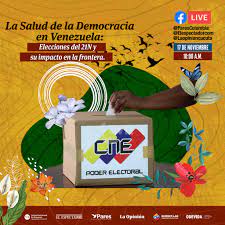
 [Nicolas] Maduro, who faces both economic sanctions and an investigation in the International Criminal Court, is hungry for democratic legitimacy, and he is likely to use the election to push the United States and the European Union to ease their positions against him….the Venezuelan Electoral Observatory said that while the government had allowed a broader spectrum of participation in this election than in past years, it continued to “restrict full freedom to exercise suffrage” in myriad ways, among them the illegal use of public funds to campaign for the ruling party.
 Venezuela is a case of ‘competitive authoritarianism’ in which regimes organize elections which the opposition has no way of winning as a source of ersatz legitimacy, thereby “weakening and co-opting the liberal dimension of democracy,” says a new report,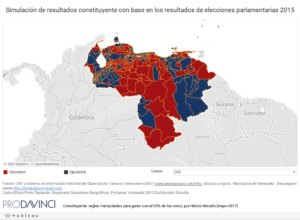
Given such conditions, one might think that election observers would sit this one out. But the European Union’s foreign policy chief Josep Borrell plans to send them anyway, despite warnings from his staff that an official delegation to observe the elections would give Maduro’s regime unearned democratic legitimacy, Lake adds.
Provea
Borrell’s policies “have been uncoordinated with his own staff or the United States or the major European capitals,” said Elliott Abrams, who served a former special representative for Venezuela. “They have done great damage to the opposition in Venezuela.”
It’s not the first time for Borrell, Lake adds. In the summer of 2020, Borrell supported Venezuelan opposition politician Henrique Capriles’s decision to negotiate on his own with the Maduro regime. This was a surprise to the U.S. government, added Abrams. He later learned from interlocutors in the Netherlands, Germany and France that they too were unaware of Borrell’s decision to support Capriles’s negotiations. RTWT
But as the parties built their lists of gubernatorial and mayoral candidates for Sunday’s elections, women were largely left out, The Washington Post adds. Of the 182 candidates running in gubernatorial or mayoral races in capital cities, only 30 are women, according to an analysis of preliminary candidate lists by independent Venezuelan news site Efecto Cocuyo.
“There’s a huge disappointment in Venezuela over the candidates,” said Natalia Brandler, president of the women’s rights group Asociación Cauce. Elevating women and younger candidates, she said, “would bring fresh air to the elections, a kind of renewal.”
Dictators like elections for the illusion – or at least the passing aroma – of democracy, where victory is securely guaranteed, fmr @NEDemocracy board member @MoisesNaim writes in @elpaisinenglish https://t.co/tVtpIJvjti
— Democracy Digest (@demdigest) November 19, 2021


