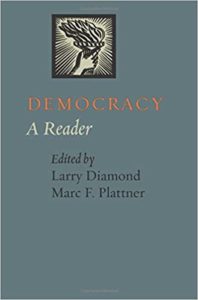
 The Indian economist Amartya Sen insisted on democracy as a universal value (in a Journal of Democracy reader, left). He also observed that democratic governance is the best antidote to the destructive effects of famine in developing countries. In a similar vein, democratic governance should — ideally — immunize us against the devastatingly unequal effects of the COVID-19 pandemic, notes Cécile Laborde, Nuffield Professor of Political Theory at the University of Oxford.
Some radical thinkers, such as the influential Italian philosopher Giorgio Agamben, have recently claimed that states of emergency are the permanent condition of modern political life, regardless of regimes. This, however, ignores the difference in the quality of freedom between democratic and authoritarian states, she writes in Liberty in the Time of Corona.
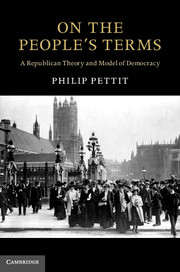 Laborde highlights the distinction between liberty as non-interference, which assumes that someone is free insofar as no one interferes with the choices one can make, and liberty as non-domination, which stresses that one is free to the extent that others do not exercise arbitrary power over one, that power exercised over citizens was a power that citizens ultimately controlled, power exercised “on the people’s terms,” according to the civic republican Philip Pettit (right). But how can we best preserve liberty as non-domination in today’s increasingly restrictive state of emergency? Laborde asks:
- First, in today’s liberal democracies the state of emergency should be the exception, not the norm. ….. It is crucially important that emergency powers be periodically reviewed and renewed (only if necessary) through parliamentary and judicial oversight. They should not be presumed to be indefinite. Normal democratic mechanisms of accountability — including elections — must be maintained as much as possible during the crisis.
- Second, in liberal democracies, non-domination is secured through the quality and transparency of public information. Democratic accountability depends on a delicate balance between trust and distrust. The public needs to be able to trust crucial sources of information, such as scientific experts and professional journalists. A well-informed public can then robustly scrutinize governmental initiatives. …..
- Third, in a liberal democracy, power should be exercised for the benefit of all the people, not a restricted faction. This truism becomes salient once we take the measure of the hugely unequal effects of the coronavirus pandemic. The pandemic has revealed how our social fabric is maintained by low-paid, working-class members of the labor force, such as nurses, social care workers, supermarket cashiers, delivery workers, and bus drivers. They now face the risk of sickness and even death on a daily basis.
National Endowment for Democracy (NED)
One problem is that the conditions of democratic resilience have slowly been eroded over the last couple of decades in existing democratic states, she adds. RTWT
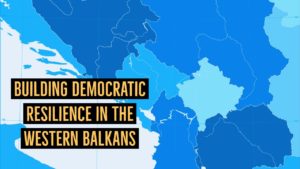
Covid-19 is deepening democratic backsliding and geopolitical competition in the Western Balkans, where authoritarian forces are undermining the EU’s democracy promotion efforts, argues Natasha Wunsch, Assistant Professor of Political Science/European Integration at Sciences Po Paris.
Ultimately, the Western Balkans’ response to the Covid-19 crisis has made two things painfully obvious, she writes for the LSE’s EUROPP blog:
- First, that the EU enlargement process has failed to act as a stability anchor for the region. As the credibility of the accession perspective has dwindled, so too has the EU’s ability to push for positive political change in the region.
- Second, and perhaps more worryingly still, the rise of alternative, authoritarian-minded powers has provided a more generalised counterweight to the EU’s democracy promotion efforts. In Central and Eastern Europe, the EU’s democratic conditionality tended to go hand in hand with a broader dynamic of democratic diffusion. In contrast, the EU’s efforts to promote democracy in the Western Balkans occur in a much more mixed international environment.
 Beyond the direct impact of the Covid-19 crisis, the countervailing force of authoritarian powers may be the best explanation for the uneven success of the EU’s democracy promotion efforts in the Western Balkans, Wunsch concludes.
The self-employed are a big part of Bosnia’s service sector but don’t benefit from labor protections and fall into the gray economy. Group 9 (right) is out to change that with legislation to create solid jobs for young people, NDI’s Robert Benjamin tweeted, citing support from the National Endowment for Democracy.


