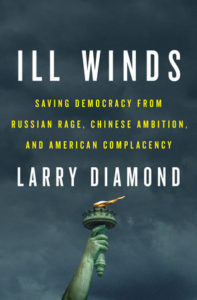
 The history of failed democracies is replete with one lesson above all others: In times of crisis, it is up to leaders committed to our democratic values to walk democracy back from the brink — and to put the constitution and the country above narrow partisan considerations, according to Joe Goldman, the president of Democracy Fund, New America’s Lee Drutman, and Larry Diamond, a senior fellow at the Hoover Institution and Stanford University’s Freeman Spogli Institute for International Studies.
Our research indicates that the United States needs exactly that kind of leadership today. Failure to act decisively now could result in a democratic crisis from which our republic may not recover, they write for The Hill:
In this environment, a recent survey of 5,900 Americans conducted by the Democracy Fund Voter Study Group should ring alarm bells about the fragility of our democracy….We recommend that leaders in both parties agree now on standards for a legitimate election and establish a specialized panel of experts to weigh in on potential claims of fraud, suppression and interference. Political leaders from both parties also must forcefully push back on rhetoric that needlessly undermines trust in the process. In the middle of a pandemic, the response should not be a subject of partisan dispute.
Peaceful contestation for power — and mutual acceptance of the legitimacy of the outcome — are irreducible minimums for a viable democracy, they contend.
 The distinction between particular procedures and underlying principles is important. Contrary to the thinking of political observers who fetishize adhering to reigning norms, losers don’t have to abide by the status quo at all costs, adds Jan-Werner Müller, Professor of Politics at Princeton University.
As hard-nosed a realist as political scientist Adam Przeworski has described elections as a means to settle the question of who is stronger without a shot being fired. However, that expectation is unsettled by authoritarian right-wing populists, whose political business model is in effect to create culture wars, exacerbate conflicts, and deepen divisions within society, he writes for The Boston Review:
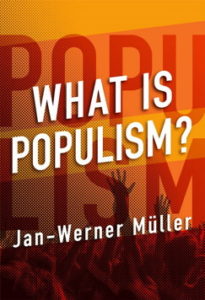
Populists who stumble at the polls appear to face an obvious contradiction: How can a party that claims to be the only legitimate representative of the people fail to win a majority at the ballot box? adds Müller, author of What Is Populism?:
 A common route out of this contradiction is the deployment of a favorite populist term: the silent majority. By definition, if the silent majority speaks, then populist leaders will be in power. If they lose, this rhetoric suggests, it is not because there is no majority backing them; it’s due to the silencing of the majority. Something or someone must have stifled the voice of the majority. Thus, populists often insinuate that they didn’t lose an election at all, but rather that corrupt elites manipulated the vote behind the scenes.
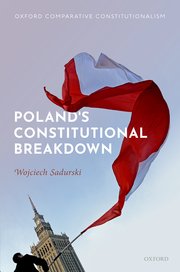
The relative invisibility of democratic backsliding in Central and Eastern Europe (CEE), is due, among other things, to the fact that autocratic changes proceed incrementally, that their truly invidious effects are triggered by mutual interactions between various discrete changes, that institutions are not formally dismantled but hollowed out of their original meanings, and that assaults upon various pillars of democracy do not proceed at the same pace, argues Wojciech Sadurski, author of Poland’s Constitutional Breakdown.
 Democratic norms are also undermined by ideological fanaticism and rectitude, argues Andrew Michta, dean of the College of International and Security Studies at the George C. Marshall European Center for Security Studies in Garmisch-Partenkirchen, Germany.
Democracy cannot survive in a society in which winners and losers are adjudicated arbitrarily according to criteria beyond individual control. Any society built around the principle of skin color will become a caste system in which accident, not merit, will allocate value and benefit. Civil society will be buried once and for all, he writes for The Wall Street Journal. RTWT
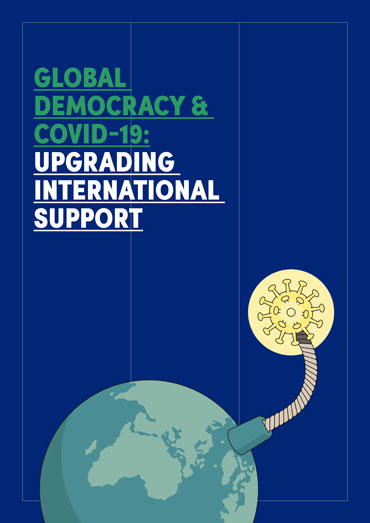
A recent report, Global Democracy and COVID-19: Upgrading International Support, examines how democratic norms are defended and work in a way that is tightly relevant to the pandemic. The report was published in the wake of the Defend Democracy initiative from International IDEA and the National Endowment from Democracy (NED).